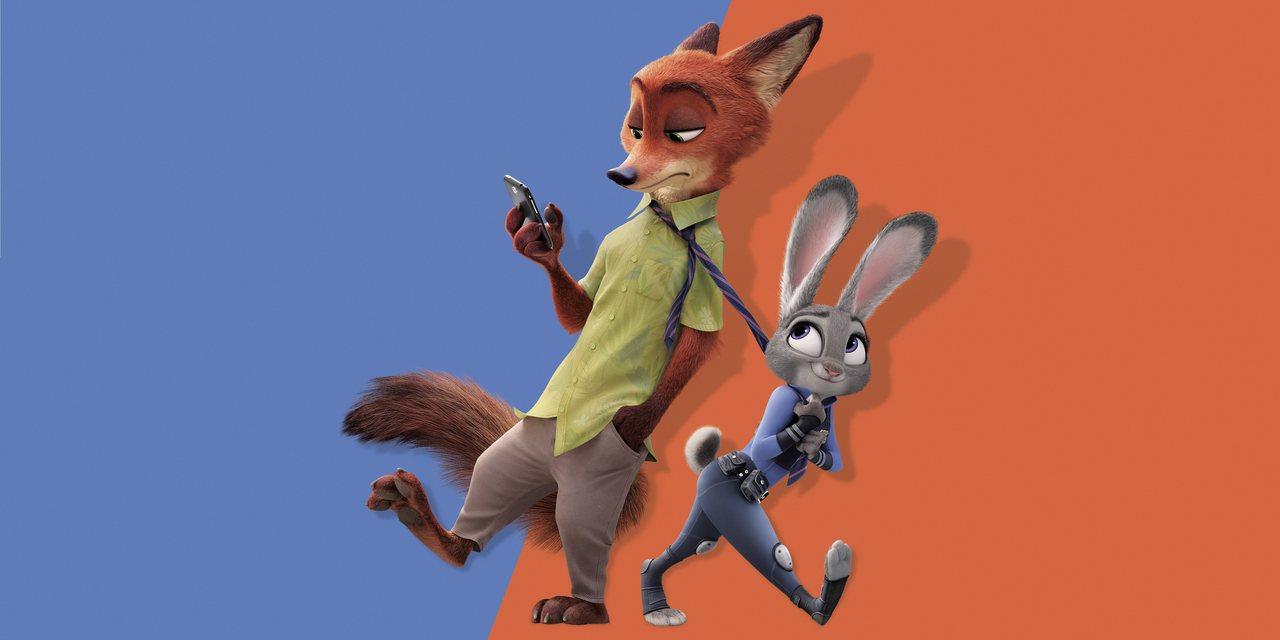
🐰🦊A Perfect Pair: Why We Love Zootopia
After enjoying years of smooth sailing, Hollywood suddenly realized that China—once its biggest overseas market—has become a graveyard for blockbusters. Take this year for instance: Jurassic World: Rebirth, the best-performing title so far, made only half of what its predecessor earned; Mission: Impossible – Dead Reckoning Part Two, backed by nostalgia and strong word of mouth, brought in just a fraction of the series’ peak; DC and Marvel heavyweights like Superman and Thor 4 barely scraped past the 100-million mark combined.
Yet while its peers groan in frustration, Zootopia 2—returning after a nine-year gap—is performing even better than the original. Before release, it easily secured 320 million RMB in presales, smashing the freshly set Chinese import animation presale record held by Demon Slayer. On its first Saturday alone, it pulled in nearly 740 million RMB, draining the market and setting new records for single-day admissions and box office for an imported film. Forecasts now point straight toward challenging Avengers: Endgame for the all-time crown.
How can a tiny rabbit and fox duo achieve what human stars can only dream of? This article might offer you some insight.
At the Crossroads of Tradition and Innovation
Looking back as an observer, it’s clear that Disney and animal protagonists have always been inseparable. From the very beginning with Mickey Mouse, to classics like Bambi, Lady and the Tramp, and 101 Dalmatians, Disney’s animated features have shaped countless childhoods. In 1994, The Lion King pushed this creative formula to its peak, solidifying Walt Disney Animation Studios’ seemingly unshakable dominance.
But just a year after The Lion King premiered, Toy Story burst onto the scene and pulled animated filmmaking into the age of CGI. Entering the new millennium, Pixar, DreamWorks, and Blue Sky Studios were thriving, while Disney Animation found itself in increasingly dire straits. Mounting deficits led Disney to shut down its hand-drawn animation division, and in 2006, it used its financial might to acquire Pixar—handing over leadership of the entire Disney Animation studio to them.
Under this new leadership, Disney began charting a path to revival. When Wreck-It Ralph premiered in 2012, its contrast with Pixar’s Brave was so stark it made some wonder whether the studios had swapped logos by accident. The subsequent hits Frozen and Big Hero 6 continued the momentum. While these films captivated a new generation of viewers, their somewhat unfamiliar style led some long-time fans to wonder: would the “old Disney” ever return?
Fortunately, fans weren’t the only ones asking that question. Director Byron Howard—who grew up watching Disney animation—wanted to create a film centered on anthropomorphic animals, much like Robin Hood. He received strong support from Disney’s chief creative officer, John Lasseter. The two realized that Disney had drifted far from its traditional roots, and they hoped to craft a film that would inherit the spirit of the 2D era while blending in the hard-earned successes of the 3D age.

Following this creative direction, Zootopia was born. On one hand, it inherited classic Disney’s approach to designing and portraying animal characters, delivering a sense of pure, heartfelt joy. On the other, its themes resonate deeply with modern society, telling a fresh, forward-looking story. Talented artists worked hand in hand, pushing Disney’s technical capabilities and narrative depth to their limits, ultimately presenting a film that stands as a rare masterpiece bridging tradition and innovation.
Zootopia Wasn’t Built in a Day
In past Disney films, the worlds inhabited by animal characters were often just simplified reflections of human society. From the outset, Zootopia set out to change that. The creators wanted to craft a world where humans never existed—one in which animals evolved on their own. A city designed by animals, for animals. It should accommodate all creatures: hooves and paws should be able to open doors with ease; elephants and mice should be able to move around unobstructed; giraffes and polar bears should all find a place that suits them.
To achieve this, the production team visited multiple wildlife reserves and natural history museums, and even traveled to Kenya for field research. They spent eight months studying the characteristics and behaviors of various animals. In addition to zoologists, the team consulted experts in transportation, architecture, automotive design, and accessibility. Drawing inspiration from the planning of New York, Paris, Shanghai, Hong Kong, and other cities, they eventually designed a vibrant, expansive metropolis.

During their fieldwork, the creators observed that wild animals gather around water sources, where predators and prey can sometimes coexist peacefully. Inspired by this, Zootopia was built around a central water system, with towering climate walls cooling one side and heating the other to sustain environments such as tundra, desert, and rainforest regions. Scattered throughout are the habitats of various species, all connected by a multi-layered transportation system ensuring freedom of movement for every resident. Inclusivity is the core principle of Zootopia’s infrastructure: public buildings offer facilities in multiple sizes to accommodate users of all shapes and statures.

From the moment the film begins, the train Judy rides into the city offers audiences a first glimpse of this delightful design philosophy. The tiered, size-scalable layouts comfortably accommodate animals of every kind. As the train rolls past the ever-climbing population counter at the entrance of Bunnyburrow, the major districts of Zootopia reveal themselves one by one to the rhythm of Try Everything. The station is equally full of surprises: a hippo emerges gracefully from an underwater passage, lemmings drop through transparent tubes like a waterfall of tiny bodies, and the multi-flavored juice that shoots into a giraffe’s hoof practically begs to be tasted.

Judy’s chase after Duke Weaselton gives us a look at the miniature district where small rodents live. The area is fenced off to prevent larger animals from wandering in by mistake, and every facility is a scaled-down version—like a tiny, self-sustaining town that makes Judy appear gigantic by comparison. Conversely, the Zootopia Police Department is designed for large animals, putting the tiny Judy at a clear disadvantage. In one deleted scene, she even has to climb over an elephant coworker’s computer with all four limbs just to check a file.

Many viewers will never forget Nick’s legendary popsicle-reselling sequence. The giant popsicles scammed from the elephant ice-cream shop melt on a rooftop, are transported to Tundratown, then refrozen using paw-shaped molds to become Pawpsicles—instantly bought up by the trend-loving lemmings. The leftover sticks are even sold as construction timber. The whole operation is so smooth and audacious that it leaves audiences stunned. Clever touches like these appear throughout the film, keeping things fresh until the very end and further enhancing the believability of Zootopia’s world.

Speaking of realism, Disney’s old software—last used in 2008’s Bolt—could no longer handle the workload. Engineers developed a brand-new grooming tool called iGroom, rendering the roughly 2.5 million hairs on each protagonist with striking lifelike detail. Judy’s fur is fine and silky, the honey badger’s longer strands are coarse and sparse, while the polar bear’s hair has a translucent, fiberglass-like quality. Animators carefully studied real animals, and the film faithfully reproduces their findings: subtle hints of skin and blood vessels beneath the fur add to the sense of vitality.

It’s not just the fur—each animal’s movement mechanics differ too. The production team considered body shape, posture, weight distribution, and other factors, designing a unique upright-walking style for every species. More than 800,000 mammal character variations appear in the film. This explosion of creativity and the almost reckless level of detail combine to form a one-of-a-kind, internally coherent ecosystem—one of the key reasons audiences are so eager to revisit the world of Zootopia.

Great Characters and Great Stories Are Equally Essential
Another key ingredient in Zootopia’s success lies in its expressive character design. The creators seized on each animal’s distinct traits, using just the right amount of stereotype while skillfully adding contrasts to enhance humor. The donut-obsessed leopard officer has a soft, round silhouette; the stern, no-nonsense buffalo chief is all sharp angles; and the mafia boss respectfully called “Mr. Big” is, amusingly, a tiny shrew. The DMV staffed entirely by sloths delivers universally relatable frustration, setting up the hilarious payoff of “Flash” speeding through the finale.

This design philosophy is even more evident in the two mayors. At first glance, the majestic, imposing Lionheart and the timid, gentle Assistant Mayor Bellwether seem to be total opposites. As the story unfolds, the dramatic reversal in their respective positions becomes both logical and surprising—a twist still widely praised today. In the sequel, Mayor Faizon the horse perfectly embodies a suave and flamboyant style, while newcomers like Gary the snake, Tanuki Bao, and Bobbert the beaver all sport distinctive personalities that help audiences settle comfortably into the world.

Among all these characters, the most carefully crafted are, of course, the two leads. To highlight how difficult it is for a small rabbit to break into the police force, Judy is given a petite, irresistibly cute appearance—balanced with powerful limbs and well-defined muscles to show her strength. Nick, who survives by hustling and scheming, adopts the classic fox archetype: clever, sly, and effortlessly languid, with loosely fitted clothing that accentuates his laid-back attitude. The team even toned down the red in Nick’s fur to make his palette blend more naturally with Judy’s when they appear together.

Once their paths cross, Judy shows her knack for thinking on her feet and her fearless willingness to take risks—using her carrot pen to tie Nick to their case, stepping forward in dangerous moments without hesitation. Nick, influenced by her actions, gradually reveals the sincerity beneath his cynical mask and consistently makes the right calls at crucial moments. This perfectly synchronized duo tracks clues with sharp intuition and ultimately uncovers a conspiracy that threatens all of Zootopia. Their affectionate banter and compelling relationship arc have won over countless fans.

Beyond its tightly paced buddy-cop action and comedy, Zootopia also weaves in other tried-and-true classic formulas: Judy plays the small-town girl chasing big-city dreams, while Nick walks the path of a wayward soul rediscovering childhood innocence. Meeting Mr. Big shifts the tone into mafia-movie territory; investigating the asylum instantly transforms the film into a horror-style sequence; and the sequel even incorporates elements of road-trip adventure. Every scene has its own tailor-made crescendo, culminating in a musical finale with Gazelle that leaves audiences wanting more.

By transplanting well-tested genre elements into an animal world and polishing every detail, the creative team seamlessly integrates varied narrative styles into the script. From fluid parkour chases to life-or-death combat, the film is filled with scenes audiences love to watch. The main duo’s overwhelming popularity fuels endless fan works, while the rest of the cast allows for rich spin-off potential. It’s no surprise that the sequel has drawn an even larger audience—its foundation was solidly built from the start.
To Reach Great Heights, One Must Be Deep Yet Accessible
You can probably guess without me saying it: the original English title Zootopia comes from Utopia. The creators did indeed consider building an idealized futuristic paradise, but during their research they realized that a city’s appearance is shaped by the history and lifestyles of its inhabitants. As a multicultural melting pot, Zootopia would naturally form uneven social hierarchies. The world shown in the film is still appealing—but no longer flawless.

The first film uses the tension between predators and prey as its entry point. With just one spark, the seemingly harmonious society is torn wide open by long-suppressed prejudices—an unmistakable metaphor for racial discrimination in the real world. In the sequel, the core conflict shifts to the divide between mammals and reptiles, echoing colonial history to some extent. Although the narrative focus differs subtly, both films revolve around the same core theme: dismantling prejudice.

The creators call for mutual understanding as the foundation for coexistence—seeking common ground while embracing differences. Assistant Mayor Bellwether, long oppressed by Mayor Lionheart, attempts to exploit fear and allow herbivores—traditionally the weaker group—to rise above predators. This plan is harshly condemned. What should be pursued is equality, not privilege. All animals are born equal and possess infinite potential. A rabbit can become a police officer; a fox does not have to be a con artist. Regardless of one’s background or appearance, everyone can boldly chase what they wish to become.

It’s worth noting that in early drafts of the story, the numerically dominant herbivores really were the rulers of Zootopia, and all predators were forced to wear “tame collars” to suppress their emotions. Because this concept was too dark and risked making audiences dislike the city itself, the creators completely abandoned it. The original protagonist—Nick, who resisted the system—was eventually replaced with the idealistic Judy, fundamentally altering the story’s direction and giving birth to the version we now know.

Writing an allegory that satirizes reality is easy; striking the right balance is the truly difficult part. Zootopia, while thoughtful and layered, never lets its themes overwhelm the story—each topic appears just long enough to make an impact without burdening the viewer. It prompts reflection upon revisiting, but avoids preachiness. Its core message is a form of “political correctness” that resonates universally. This family-friendly posture is precisely what allows it to capture the hearts of audiences of all ages.
Easter Eggs Everywhere — Adapted for Every Audience
Disney has always loved hiding Easter eggs, and Zootopia is no exception. Although mascot Mickey Mouse doesn’t appear directly, his silhouette is scattered throughout the film. The spots on Clawhauser’s right cheek and the donut he’s munching on, the pen cap held between Officer Hippo’s hooves, the stroller that brushes past Nick… Even the railings behind Judy and Nick during their fight on the skybridge subtly form the iconic three-circle shape—easy to catch if you pause and look closely.

Other Disney animated films also make cameo appearances. The stone-faced Chief Bogo has San Fransokyo from Big Hero 6 pinned on his office calendar, the chameleon from Tangled hidden in his badge, and when he scolds Judy, he bluntly quotes Let It Go. No wonder he secretly uses a Gazelle face-swap app. Elsa and Anna even sneak into Tundratown disguised as little elephants—hopefully having a wonderful time.

Of course, not all Easter eggs are meant to be hard to find. Mr. Big’s Godfather-inspired persona in the first film, and Gary the snake’s Ratatouille reveal in the second film, are clear gags designed for audiences to recognize instantly, adding fun and levity to the experience. A keen eye will also catch nods to classics like Breaking Bad and The Shining, further increasing the joy of watching.

In addition, Disney created several region-specific Easter eggs. For example, the ZNN news anchor is a moose in most regions, but a giant panda in China, a tanuki in Japan, a jaguar in Brazil, and a koala in Australia. Gazelle’s theme song also varies by region—the Chinese version of the first film was sung by Chinese-Canadian singer Judy Wu, while the mainland release of the sequel swapped the end-credits track for Mayday’s “Party Animal.”

Disney has gone far beyond this in cultivating the Chinese market. Shanghai Disneyland is home to the world’s only Zootopia-themed land. The spin-off short series Zootopia+ launched a Chinese dub on Bilibili. And earlier this month, Disney China collaborated with Shanghai Animation Film Studio to release Zootopia: Day and Night, a new anthology of shorts using traditional Chinese animation techniques such as puppet animation, ink-wash, 2D cel animation, and paper-cutting to tell humorous stories within the Zootopia universe.

A dazzling array of Easter eggs that reward fans, combined with thoughtful localization and Disney’s strong marketing capabilities, have further fueled the franchise’s global success. In a way, Zootopia 2’s historic box-office performance in China—despite Hollywood’s declining influence in the region—may well be a testament to Disney’s sincerity.
Conclusion
Much like the inclusive city it portrays, Zootopia is a film that resonates across cultures. Every audience member can find something to appreciate—whether watching casually or analyzing deeply. And even if you strip away all the themes and Easter eggs, it still stands as a model commercial film: brimming with charm, surprises, and pure entertainment.
A clear narrative vision, outstanding technical execution, and precise craftsmanship have all contributed to Zootopia’s enduring vitality. Its creative approach is not only worth learning from, but also something Disney has increasingly lacked in recent years. Hopefully, the success of Zootopia 2 signals a new beginning—one that inspires more excellent works in the future.
References
- The Art of Zootopia — Concept Art Collection
- Imagining Zootopia — Documentary
- Zootopia Blu-ray Bonus Features
If you’d like to learn more about the behind-the-scenes process, feel free to explore these materials.
Tags: 101 Dalmatians, Bambi, Jurassic World: Rebirth, Lady and the Tramp, The Lion King, Toy Story, Zootopia
Leave a Reply